PRODUCT UPDATE
CIBO Practice ID Streamlines Practice Monitoring
12/10/2025
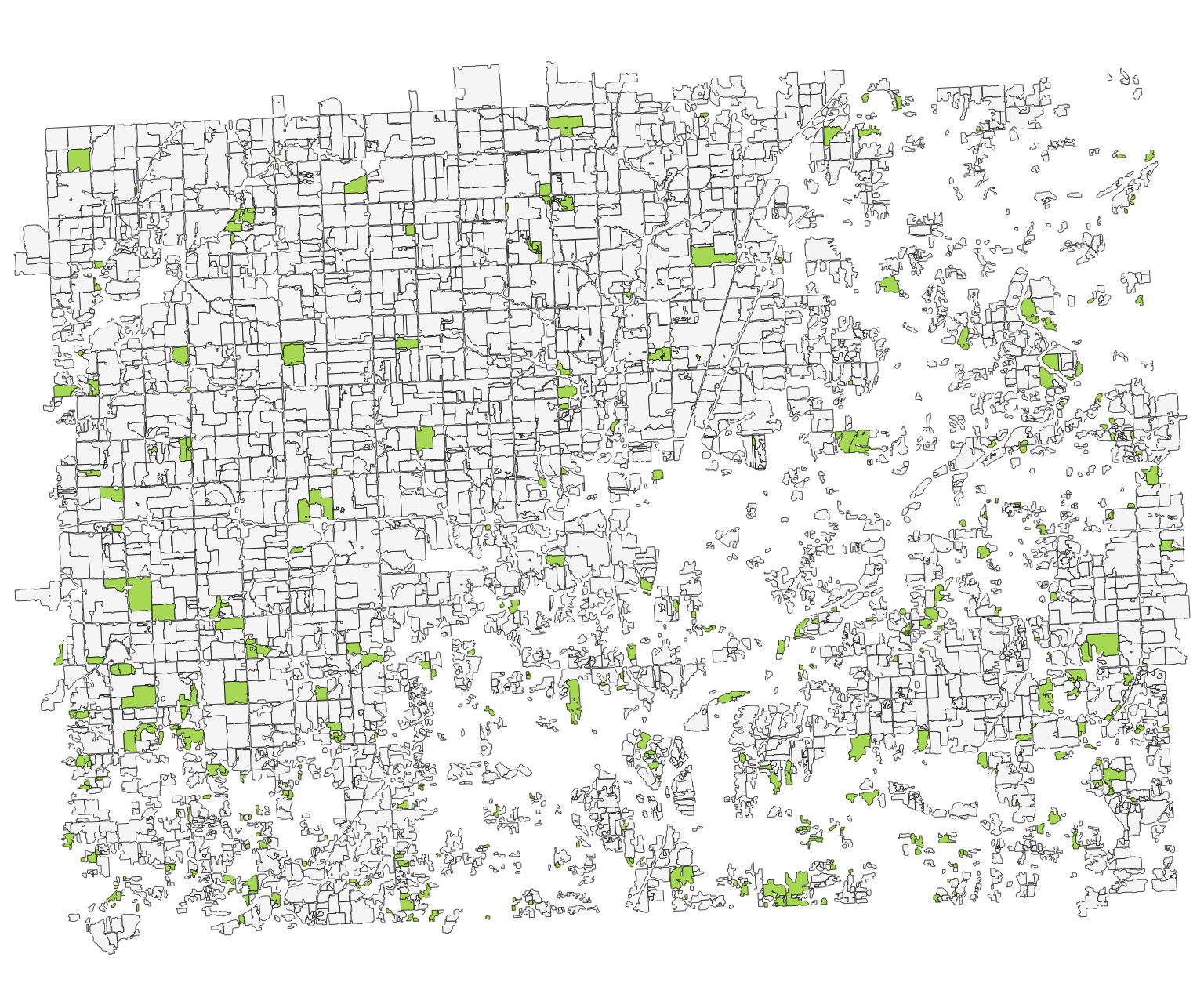
The CIBO Practice ID 2025 product update is now live in CIBO Impact. CIBO Practice ID provides users with the leading market solution to remotely sense and monitor cover cropping and tillage practices on fields across the entire continental U.S.
CIBO Impact users can generate practice insights to determine eligibility, monitor practices and model outcomes on fields, with model accuracy at near 90% for cover crops and over 80% on tillage.
When users create a new field in CIBO Impact, the platform will automatically populate the current management practice. Practice data is available back to 2017, allowing for up to 9 years of full historical field profiling.
Monitoring Practice Adoption, No Farmer Data Required
Similar to CIBO Crop ID which identifies what crop is present, CIBO Practice ID maps the presence or absence of cover crops and the type of tillage. Mapping is achieved using advanced machine learning and computer vision algorithms applied to multi-year satellite imagery. CIBO’s model is trained and validated against independent field data and reported county- and state-level NASS and FSA data.
Each “pixel” corresponds to a land area and is classified according to the inferred practice. For cover crops, this is a binary value encoding the presence or absence of a cover crop. For tillage, the model tags one of three categories: conventional tillage, conservation tillage, or no-till.
Each pixel is also assigned a confidence value, which represents the level of confidence or certainty that the model has in the classification. This allows users to make better decisions, based on all the available information the model has. Each pixel represents 10x10 meters, for greater spatial resolution than competing solutions.
2025 Practice Adoption, by State

2025 Practice Adoption, Raw Acreage

CIBO Practice ID also enables users to:
- Analyze and visualize results from the field/subfield level to aggregated zones (regions, states, or USDA-defined larger areas). This spatial flexibility supports operational insights and high level, practice-based reporting.
- Run the model near real time, for earlier in-season detection, in addition to retrospective post-season results in May or June.
- Access historical datasets from 2017 through 2025, so users can analyze and display trends across 9 years. These insights are critical for studying and simulating change over time and documenting results.
How Businesses Benefit
With CIBO Practice ID, users have a scalable, accurate and cost-efficient way to monitor and analyze core regenerative agriculture practices, with benefits for the entire supply chain.
- Practices are monitored using remote sensing inputs, which reduces the burden on farmers to self-report practices. This ensures data integrity, transparency and auditability.
- Practice data provides the necessary information to understand ongoing and historical practices.
- Organizations can run simulations (hypothetical outcomes) without burdening growers, allowing for rapid iteration and market insights at scale. The remote sensed data can also “gap fill” data that farmers don’t or incorrectly report, enabling a landscape-scaled modeling solution.
- CIBO Practice ID enables thorough, objective monitoring of agricultural practices over large areas and multiple years, providing verifiable longer-term evidence and detecting trends that impact supply chain sustainability.
- Companies can process varied scale datasets on demand, enabling them to reward sustainable practices or allocate resources more effectively while still maintaining grower privacy and independence from farm-level reporting.
Compared to existing practice monitoring solutions, CIBO Practice ID offers greater spatial resolution (down to pixel/subfield), longer-term and richer datasets, and near real-time capabilities.
Data-driven Efficiencies
With CIBO Practice ID, companies can reliably detect and monitor management practices, lessening the burden on growers to provide this data and for companies to validate it. Timely and accurate practice insights—whether at the field or regional level—enable companies to not only enhance monitoring and reporting, but also make critical decisions about what practices to use, and where.
Interested in learning more? Request a demo.